Remounting masterpieces across three continents with Tanya Uyeda

Thanks to an international collaboration, talented conservators at SAM, the British Museum, and the Tohoku University of Arts and Sciences are breathing new life into (beautiful) old doors.

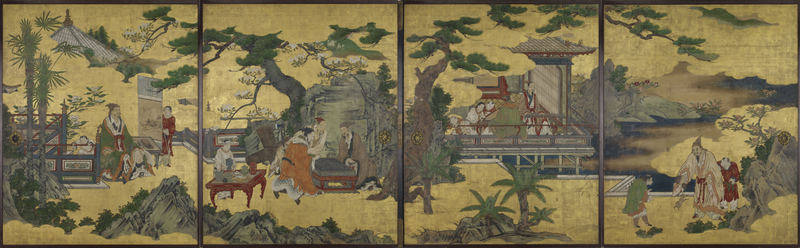
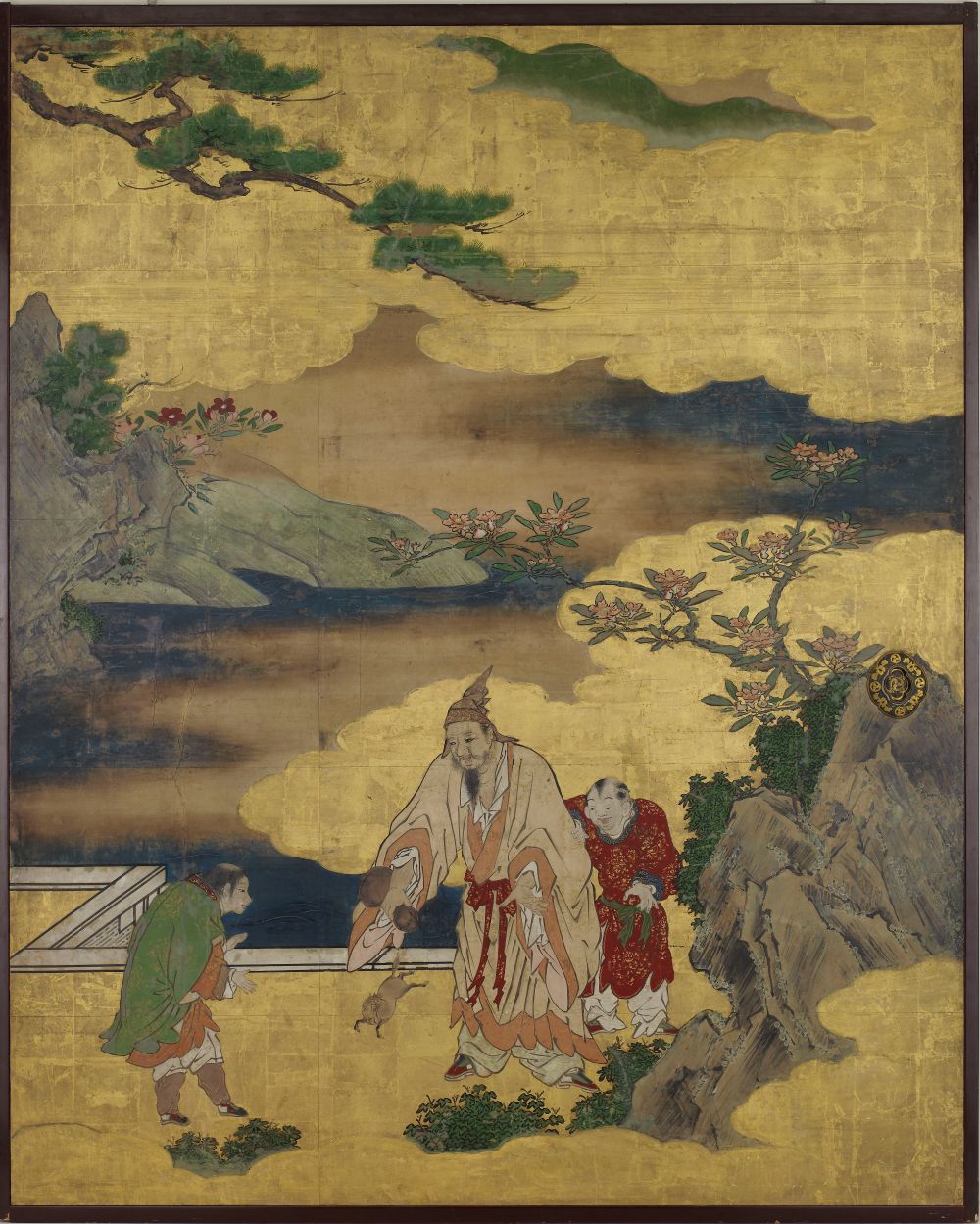
Kinkishoga, Sennin-zu (The Four Accomplishments and Immortal) is an opulent set of 17th-century Japanese sliding door panels currently being remounted in the Tateuchi Conservation Studio for a loan to a Japanese exhibition this summer.

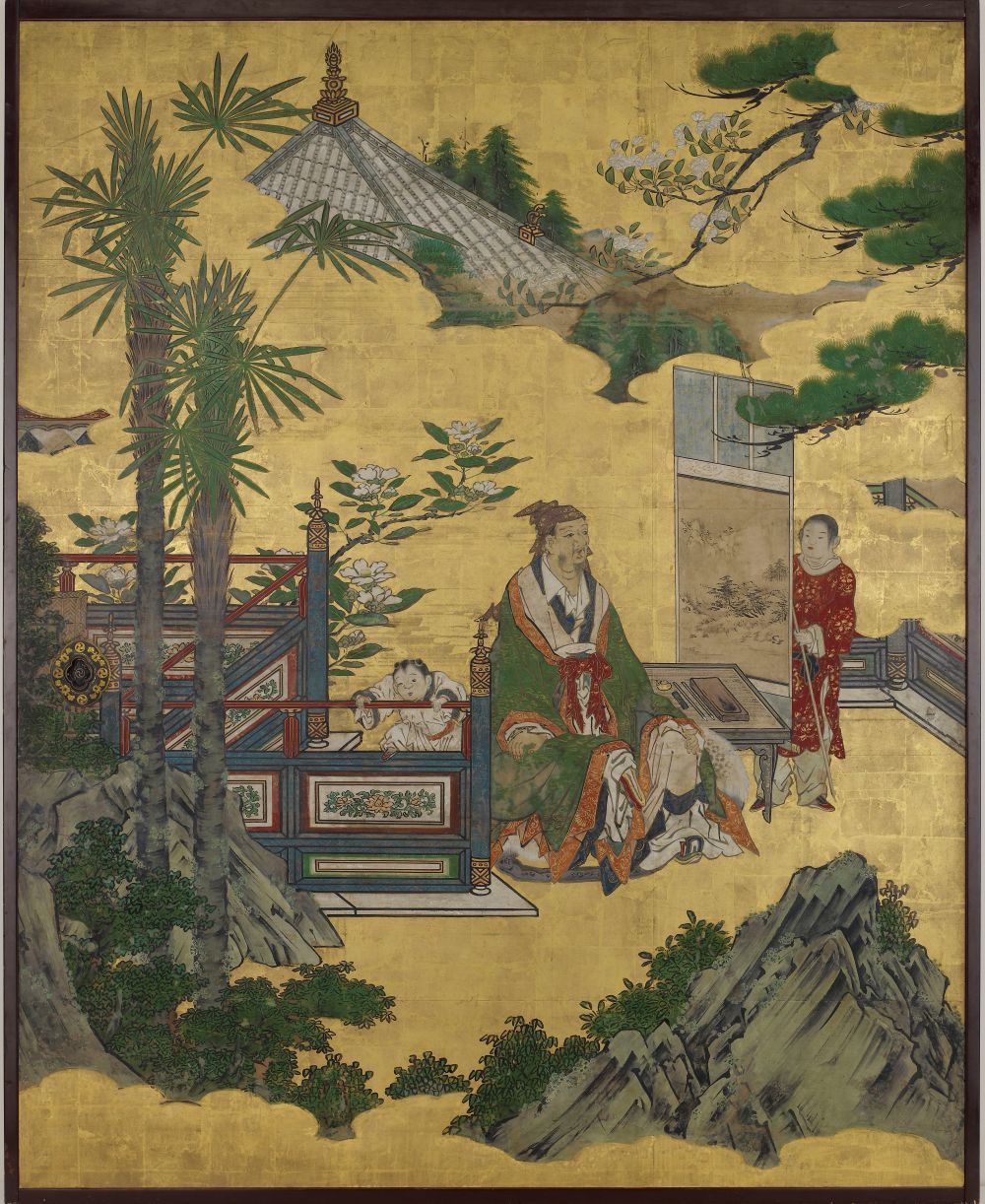
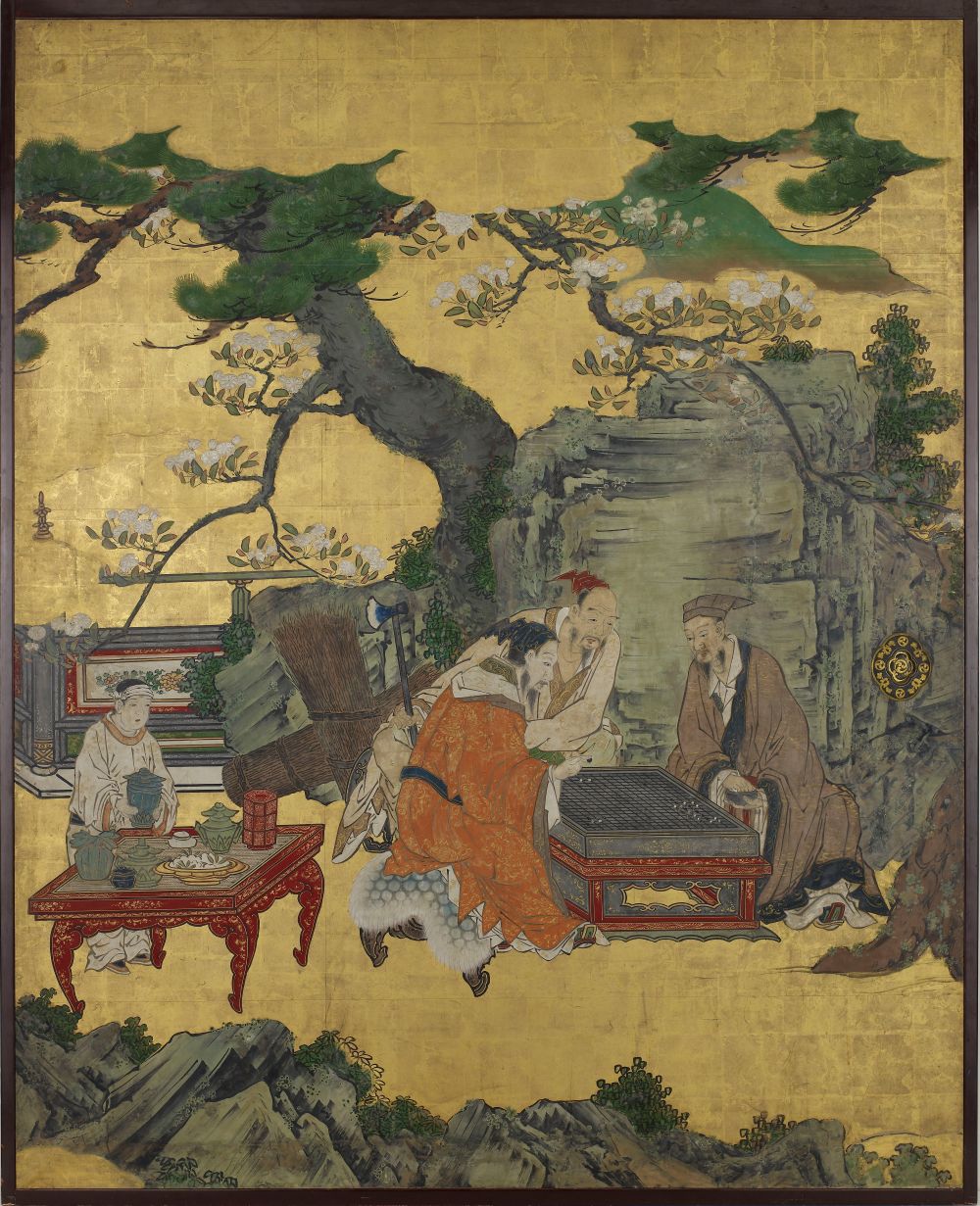
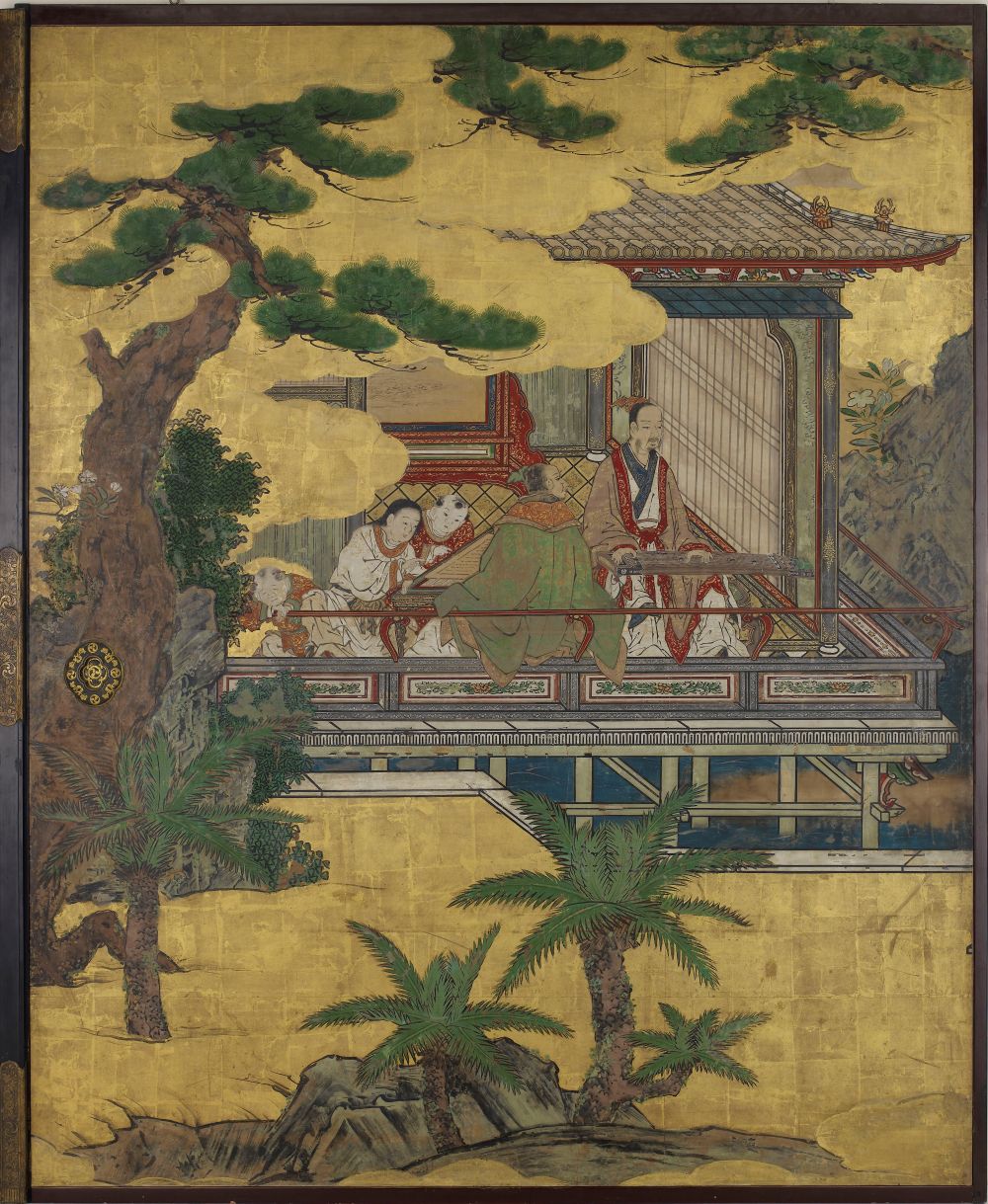
Acquired by SAM founding director Dr. Richard Fuller in 1951, the fusuma paintings depict Chinese scholar-gentlemen enjoying music, games, calligraphy, and painting in a lush garden. This popular subject was appropriated by Japan for door panels and folding screens during the 15th and 16th centuries. SAM’s fusuma were once a part of a larger suite of paintings installed in an important temple-shrine complex in the Nara region of Japan, parts of which are now in the British Museum and recently discovered in a private collection in northern Japan.
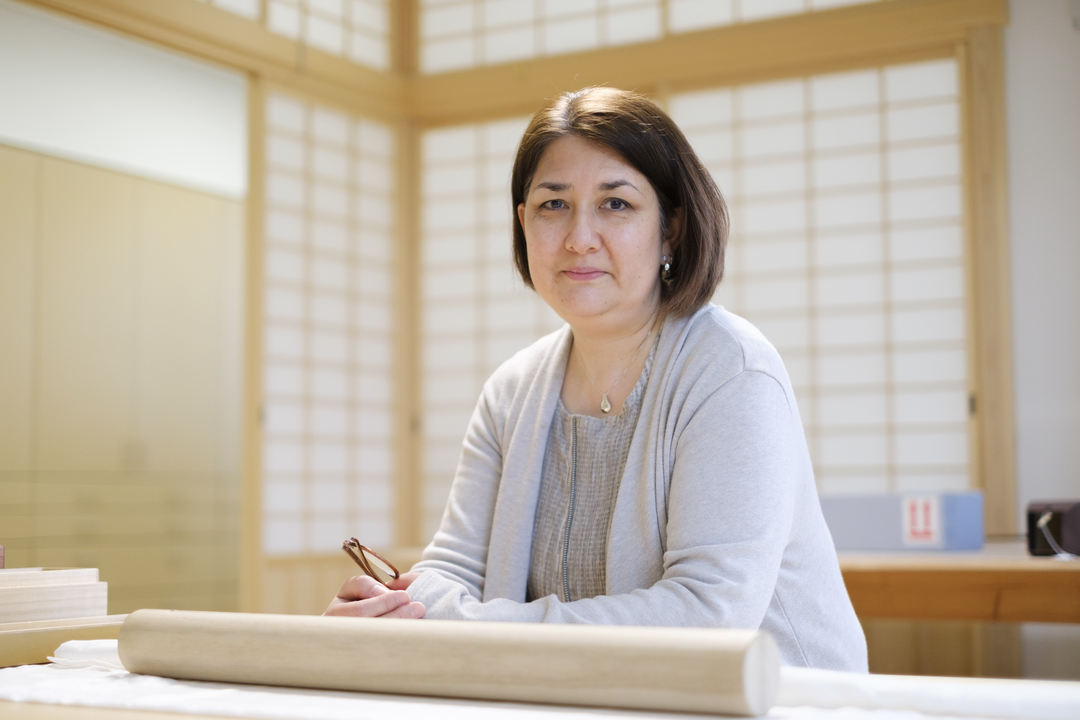
Leading the conservation effort on SAM’s team is Tanya Uyeda, SAM’s Director of East Asian Paintings Conservation. On November 20, 2025, Uyeda presented a fascinating talk about the history and preservation efforts of these sliding door paintings in SAM’s collection. This talk was part of Up Close with Conservators, a member-only lecture series where conservator specialists share the challenges, importance, and outcomes of art conservation.

“It is always a pleasure to share the work that my colleagues and I are doing in SAM’s busy Department of Conservation,” Uyeda said. “I appreciate the opportunity to learn in depth about the work my colleagues are doing, as we are often sequestered away in our own respective bubbles.”

Couldn’t attend her lecture? We asked Uyeda if she could share some of these insights on SAM Stories—read her insightful responses below. (And become a SAM member to attend future events like these!)

What tools or materials are required to remount these sliding door panels?

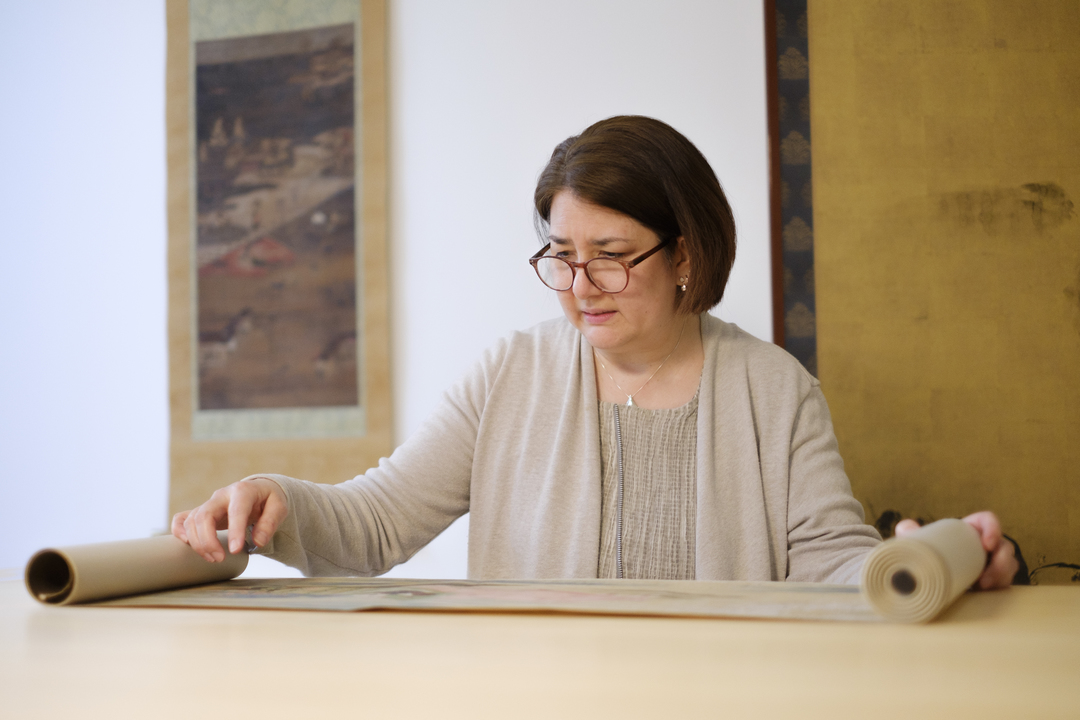
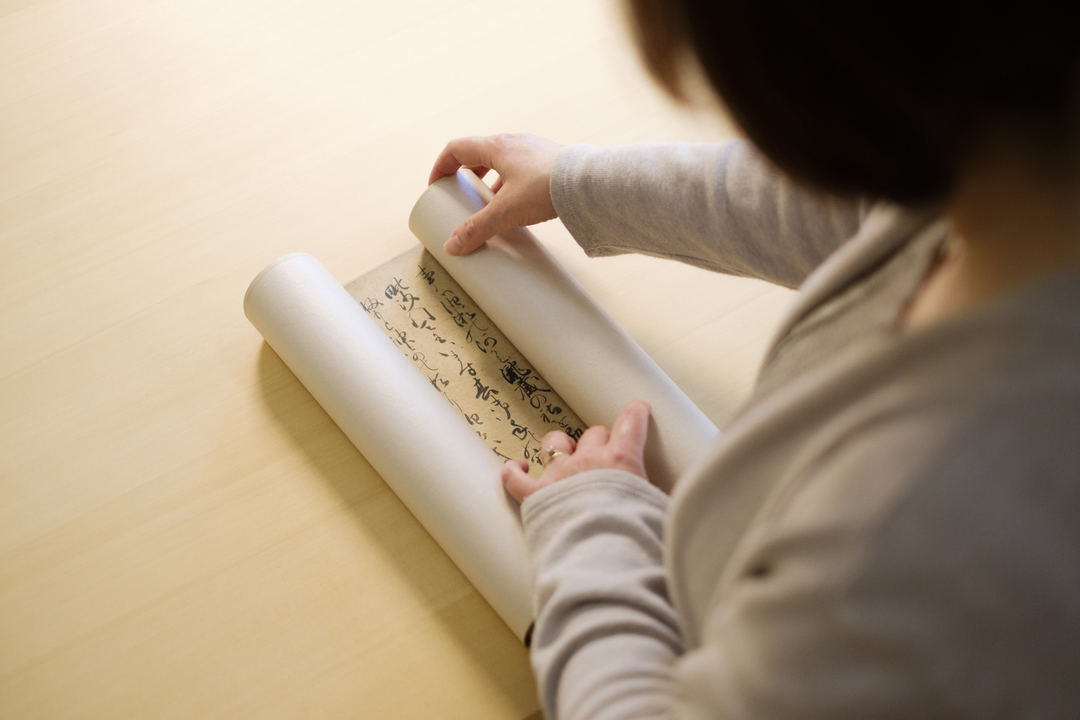
One of the unique features of Japanese paintings is their display format or “mounting,” such as a hanging scroll, hand scroll, folding screen, or in this case, fusuma (sliding doors). Because the painting is physically attached to the mounting, conservation treatment concerns both the mounting structure and the painting itself. For sliding door panels, treatment requires removing and stabilizing the paintings, as well as dismantling and rebuilding the mounting structure.

A new interior lattice and matching lacquer trim is being custom-made in Japan for SAM’s fusuma, so we do not require specialized carpentry tools to build them ourselves. We do prepare the handmade Japanese papers used to build up the support structure attached to the panels. Treatment of the paintings requires tweezers, brushes, and water sprayers to remove old paper support linings, along with knives, awls, and bamboo folders to prepare new linings. Adhesives include animal glue to consolidate friable pigments on the paintings, and a great deal of wheat starch paste for adhering support layers, mending tears on the painting, and for applying the support layers to the panels. After this work, we’re able to mount the painting to its finished panel.
What do you think people would be most surprised to learn about The Four Accomplishments?

These paintings are part of a larger suite that decorated the guest quarters of an important shrine in the Nara region of Japan in the 17th century. During this time period, sliding door paintings—which were always double-sided—served as room dividers. In their original configuration, the four SAM fusuma paintings are believed to have been attached to the other side of a set now in the British Museum collection.

The formerly double-sided panels were divided into eight panels that were subsequently sold to separate institutions. Many Japanese paintings undergo significant changes throughout their lifetime. Sliding door paintings could be turned into a set of folding screens,  or a long handscroll may be separated into sections and remounted as multiple individual hanging scrolls. Investigating the materiality and structure of these paintings is essential to understanding their history, use, and connections over time. 
The fusuma paintings have a long and rich history. During the conservation process, did you discover anything new about the provenance of these works?

Dismantling panel paintings such as these fusuma always leads to insight into past treatments and their past setting. Paper was a valuable commodity, and recycled papers were often used to build the support structure for panel paintings. These papers may have been taken from old account books, letters, and other correspondence, or even newspapers in later years.

Random dates and place names on these materials can give us clues as to when and where the painting was last conserved. We were able to confirm speculation that SAM’s paintings were remounted at least twice since departing their 17th-century shrine setting by dates on these underlayer documents, along with an inscription on the interior wooden lattice. By comparing paper characteristics, sizes, and configurations of the papers used on the SAM paintings with the related artworks, we can confirm through material evidence the purported relationship between fusuma paintings at the British Museum and those recently discovered in a private collection in Aomori, Japan.
These doors are being prepared for a loan to a Japanese exhibition next summer. Could you tell us more about this exhibition and collaboration?

The paintings will be a part of a larger show focused on the Japanese collection at the British Museum. It will travel to two venues in Japan in the summer of 2026. The sliding doors related to SAM’s paintings are the only paintings of this format in the British Museum collection, so the reunification of these long-separated works with those recently discovered in Aomori is a highlight of the exhibition. I have been collaborating with my conservator colleagues at the British Museum, as well as at the Tohoku University of Arts and Sciences, to share information on the British Museum and Aomori fusuma. We are excited to have conservation play an important role in the scholarship of these artworks.

Because of the large size of the paintings, we are collaborating with the  National Museum of Asian Art at the Smithsonian to assist me in key treatment stages of the paintings. With the help of two colleagues, we have already completed treatment on two of the four paintings in December of last year. On the curatorial side, Aaron Rio, Tateuchi Foundation Curator of Japanese and Korean Art at SAM, has been collaborating with art historians and curators in London and Japan in preparation for this exhibition. This has already led to the important attribution of the paintings to the artist Kano Sōgen Shigenobu. Next year, Aaron Rio will contribute an essay about the SAM artworks in the prestigious Japanese art historical journal Kokka, as well as the forthcoming exhibition catalog.

Artwork credit: The Four Accomplishments and Immortal (Kinkishoga, Sennin zu fusuma e). Kano Sōgen Shigenobu, Japanese, active late 16th-early 17th century. Late Momoyama period (1573–1615) or early Edo period (1615–1868). Set of four sliding door panels; ink, color, and gold on paper. Eugene Fuller Memorial Collection, 51.37.1–4

Muse/News: Art Doctor, Fall Reading, and Dürer’s Spite

SAM News

“Behind the scenes at SAM’s new Asian art conservation studio”: For the Seattle Times’ Pacific Northwest Magazine, Brendan Kiley takes you into SAM’s Atsuhiko and Ina Goodwin Tateuchi Conservation Center and introduces to you to Tanya Uyeda, the center’s new conservator of East Asian paintings.

“Now that SAM has its own studio and conservator—with plans to hire others, likely with Chinese or Korean expertise—it hopes to treat works not only from its own collection, but collections around the country. From here on out, Uyeda expects to be doing a lot of surgery.”

Here’s a Seattle Times reader “rave” for the Seattle Asian Art Museum’s 2020 remodel. Good news: You’ve now got one more day a week to visit our Art Deco gem; it’s now open Thursdays as well as Friday–Sunday. 

Among The Seattle Times’ Margo Vansynghel’s “Must-see Seattle-area exhibits in October” is a free book launch event. Mattilda Bernstein Sycamore debuts Touching the Art at SAM on Sunday, October 15. Andrew Engelson also recommended the book in “New Local Releases to Read This Fall” in The Stranger’s fall Art and Performance Quarterly.

“No, I’m not recommending an art show where you’re allowed to touch the art. But I promise that you’ll feel like you’re up close with the paintings local writer Mattilda B. Sycamore describes in her new—and yes, touching—memoir.”

Local News

Get your fall reading list together with this Seattle Met list of Washington State Book Awards winners and finalists.

Whether you made it or missed it, relive the joy of Walk the Block at Wa Na Wari

Vansynghel also reported on the departure of E. Michael Whittington as the executive director of the Bellevue Arts Museum. Kate Casprowiak Scher has been named interim executive director.

“Scher—who’d already been volunteering with the museum—has already jumped into the fray, connecting with staff and assuming Whittington’s responsibilities to make the transition as smooth as possible.”

Inter/National News

Farah Nayeri for the New York Times Magazine on Louvre director Laurence des Cars’s “big plans for the world’s most visited museum.”

CBS Sunday Morning shared highlights “from hip hop to Picasso” in the upcoming arts season. There’s even a mention of Renegade Edo and Paris: Japanese Prints and Toulouse-Lautrec, on view through December 3 at the Seattle Asian Art Museum!

A spicy headline, via Adam Schrader for Artnet: “Albrecht Dürer Painted Himself Into a 16th-Century Altarpiece to Spite a Patron Who Paid Him Poorly, New Research Suggests.”

“It’s essentially him saying, ‘this is not actually about you as a patron, Mr. Heller. This is art and this will endure and will be looked at in 500 years’ time.’”

And Finally

“The great Seattle sitcom.”

– Rachel Eggers, SAM Associate Director of Public Relations

Photo: Alborz Kamalizad.

Making History: Meet Tanya Uyeda, SAM’s Inaugural Senior East Asian Paintings Conservator

This spring, Tanya Uyeda joined SAM as the museum’s inaugural Senior East Asian Paintings Conservator. A leader in conservation practice, education, and research, Tanya assumes responsibility for the care of SAM’s East Asian painting collection, focusing on conservation treatments and sourcing the necessary specialized materials and tools. 

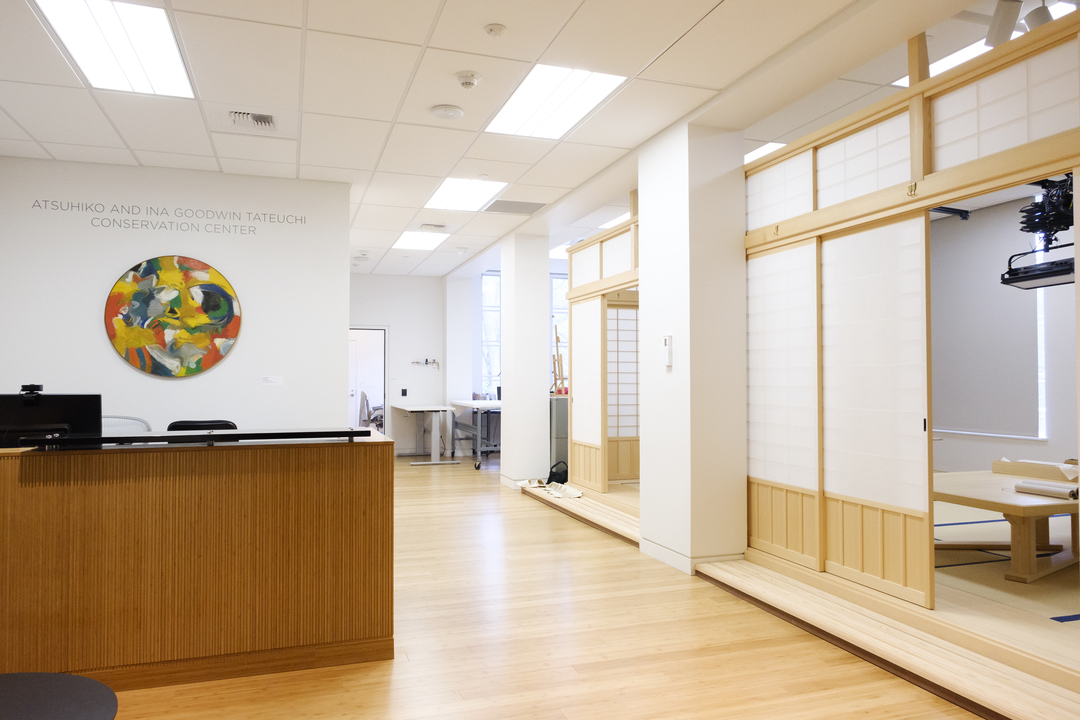
Her appointment also marked the start of regular activity in the landmark Atsuhiko and Ina Goodwin Tateuchi Conservation Center, which opened as part of the renovated and expanded Seattle Asian Art Museum in February 2020. The center is one of only a handful of museum studios nationwide dedicated to the comprehensive treatment of East Asian paintings, and the only studio of this type in the western US.

Tanya comes to SAM with over 28 years of experience in art conservation, including over 20 years as a conservator of Japanese paintings at the Museum of Fine Arts, Boston. Born in Eugene, Oregon, Tanya received a Bachelor of Arts in East Asian Studies: Japanese Language and History from Oberlin College and earned a Master’s Degree in Preservation of Cultural Properties from Tokyo University of the Arts. She also trained at an elite painting conservation studio in Tokyo. She is one of only four American conservators of a similar background working in a US institution, as there are no conservation training programs for East Asian paintings outside of Asia.

Just a few months into her tenure at SAM, Marketing Content Creator Lily Hansen spoke with Tanya about her short- and long-term goals, what members can expect in her upcoming Up Close With Conservators talk this fall, how she’s adjusting to Seattle, and more.


LILY HANSEN: Welcome to SAM! After spending more than 20 years in Boston, how are you adjusting to Seattle?

TANYA UYEDA: It seems I arrived in Seattle at the best time of year—I’ve really been enjoying this spectacular summer weather! I’ve settled into a home in the Ballard neighborhood and have been getting it ready in anticipation of my family relocating from Boston later this fall. It’s been so nice to explore the Ballard Farmers Market every Sunday and recently took a weekend jaunt over to Bainbridge Island. I also have extended family in the area, and it has been lovely to be able to reconnect with many of them.

LH: How does it feel to be named SAM’s inaugural Senior East Asian Paintings Conservator?

TU: I feel very honored to be chosen for this important new position. Before arriving at SAM, I worked at the Museum of Fine Arts, Boston, which houses one of the most important and comprehensive collections of Japanese art in the US. Most of my work on the Japanese painting collection supported large-scale touring exhibitions that were shown primarily in Japan. 

I am looking forward to continuing this work at the Seattle Asian Art Museum and contributing to the preservation of, and scholarship on, the museum’s East Asian painting collection. I can’t wait to share my insights with members and visitors alike, and to support the care and appreciation of these important artworks throughout the entire Western Pacific region.

LH: What are a few of the goals you set for yourself in taking on this position?

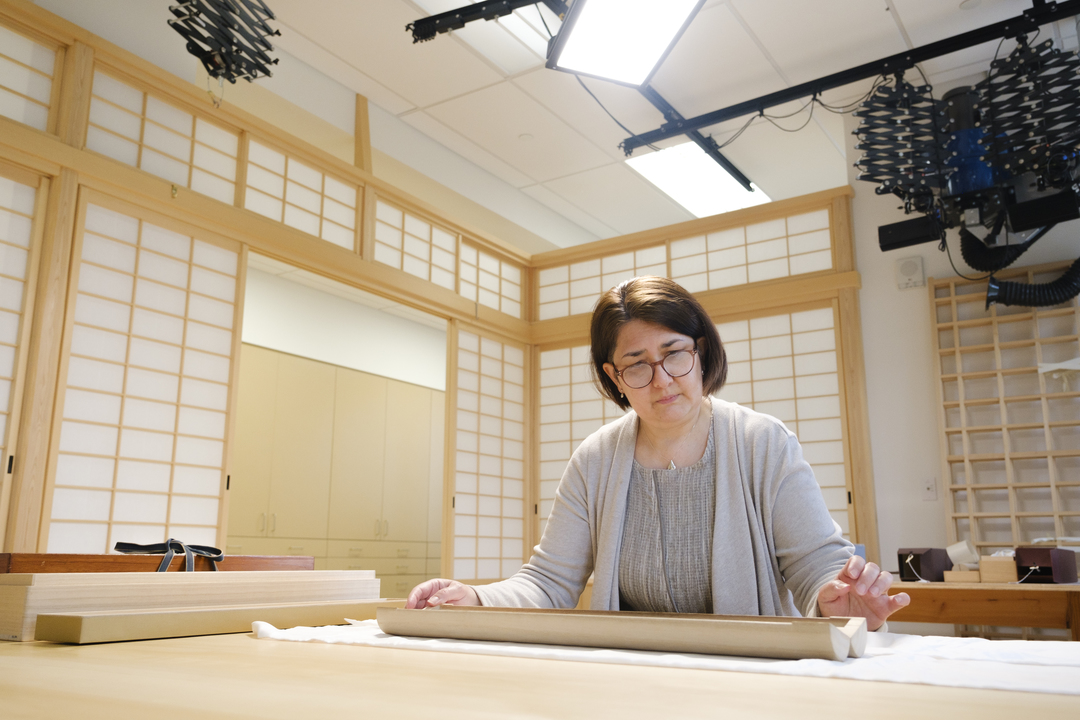
TU: Since assuming my role, my immediate focus has been setting up the Tateuchi Conservation Center as a fully functioning conservation studio. The renovation of the Seattle Asian Art Museum included the creation of this beautiful new workspace, necessary infrastructure such as work tables, sinks, light tables, and fume hoods. The tatami mat flooring and low work tables are what you would see in a traditional Japanese scroll mounting studio, and is what I am accustomed to from my training.

In addition to the basic conservation equipment, East Asian paintings require highly specialized (and expensive!) materials and tools, such as handmade paper, woven textiles, decorative fittings, and various types of brushes, adhesives, pigments, and dyestuffs. Many of these necessary items are imported directly from Japan and China, and are becoming increasingly difficult to source due to the aging out of the artisans that produce them and a lack of younger craftsmen to replace them.

For example, there is a type of paper called “misu-gami” that is produced in the Yoshino region of Japan and provides the flexible inner structure of Japanese hanging scrolls. However, there is now only one papermaker producing it. I will be relying on the generous cooperation of conservation colleagues in Japan and the US, as well as suppliers and craftspeople, to support me as I work to outfit the Tateuchi Conservation Center and carry out the treatments we intend to complete.

LH: The Emerging Arts Leader Internship Program is an integral part of SAM’s mission to connect art to life. This summer, you welcomed Alexa Machnik as your first Emerging Arts Leader Intern in Conservation. What has it been like working with Alexa? Do you intend to take on more interns in the future?

TU: I was very fortunate to meet Alexa and convince her to spend the summer with me in Seattle before she begins a fellowship with the Los Angeles County Museum of Art this fall. As a Mellon Foundation Fellow at the Institute of Fine Arts, New York University and a fourth-year student in the university’s MA/MS program in art history and conservation, she also has extensive working experience at institutions such as the Yale University library and Metropolitan Museum in New York.

The primary focus of Alexa’s internship has been to work alongside me in building eight new karibari, or drying boards, for the studio. These boards are an essential component of every East Asian painting conservation and mounting studio. They consist of a wooden lattice undercore and feature up to 11 layers of handmade paper pasted in specific configurations on either side to provide a sturdy and breathable, yet lightweight surface for stretch drying and flattening artworks during treatment. It is a time consuming and physically demanding task, and I am grateful to have Alexa’s assistance! Building the boards is also excellent training in the use of brushes and knives, different thicknesses of paste, and the preparation of various types of handmade paper. She is also helping me process an important series of artworks gifted to SAM at the bequest of longtime benefactor, the late Frank Bayley III, as well as designing  new display apparatus for upcoming gallery rotations at the museum.

My hope is that the Tateuchi Conservation Center will serve as a training resource for future conservators of Asian art, as coursework in East Asian painting conservation is not an area of study offered in North American or European graduate conservation programs. Training in this field is still largely apprenticeship-based, taking place in private studios across Japan, China, Taiwan, and Korea. As a result of their unusual formats, Asian paintings require dexterity, specialized tools, refined aesthetic sensibilities, and linguistic, cultural, and historical knowledge. In the US, the field tends to attract students with a background or interest in paper conservation. These include so-called pre-program students (those seeking admittance to North American conservation programs) or recent graduates from these same programs. Occasionally, students with academic or practical training from Asia are considered as well. 

LH: This fall, SAM will launch Up Close with Conservators, a members-only lecture series offering an in-depth look at the conservation work taking place at the museum. For the inaugural lecture, you’ll be in conversation with SAM’s Jane Lang Davis Chief Conservator Nick Dorman. What can SAM members expect to hear in your discussion with Nick?

TU: Up Close with Conservators is an exciting opportunity to highlight the individuals who make up SAM’s conservation team and to share the details of our work with the public. We chose to title the series “Up Close” because much of our work begins with a close examination of the objects. We look forward to educating members on the works of art in our care, sharing our discoveries, explaining how we assist the museum’s curators in interpreting the artistic intent of each artwork’s creator, and articulating how best to handle, store, and preserve art for future generations. 

In our lecture, Nick and I will discuss the museum’s long journey to establish the Tateuchi Conservation Center at the Seattle Asian Art Museum, and what the role of this new resource will be for the understanding and preservation of the important East Asian collections in the West Coast region. I will also be giving a brief overview of the kind of work that will take place in the studio, and what conservation of East Asian paintings looks like. It will be my first opportunity to speak to SAM’s members and is sure to be a engaging conversation.

– Lily Hansen, SAM Marketing Content Creator

Photos: Alborz Kamalizad.

SAM Stories