Remounting masterpieces across three continents with Tanya Uyeda

Thanks to an international collaboration, talented conservators at SAM, the British Museum, and the Tohoku University of Arts and Sciences are breathing new life into (beautiful) old doors.
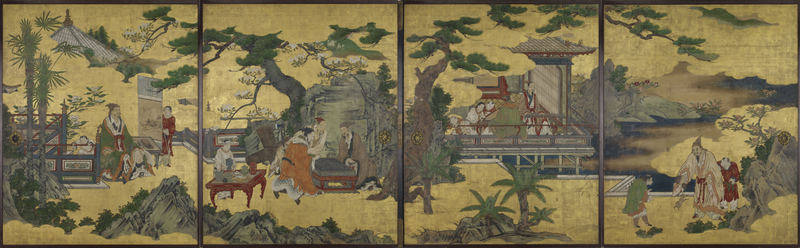
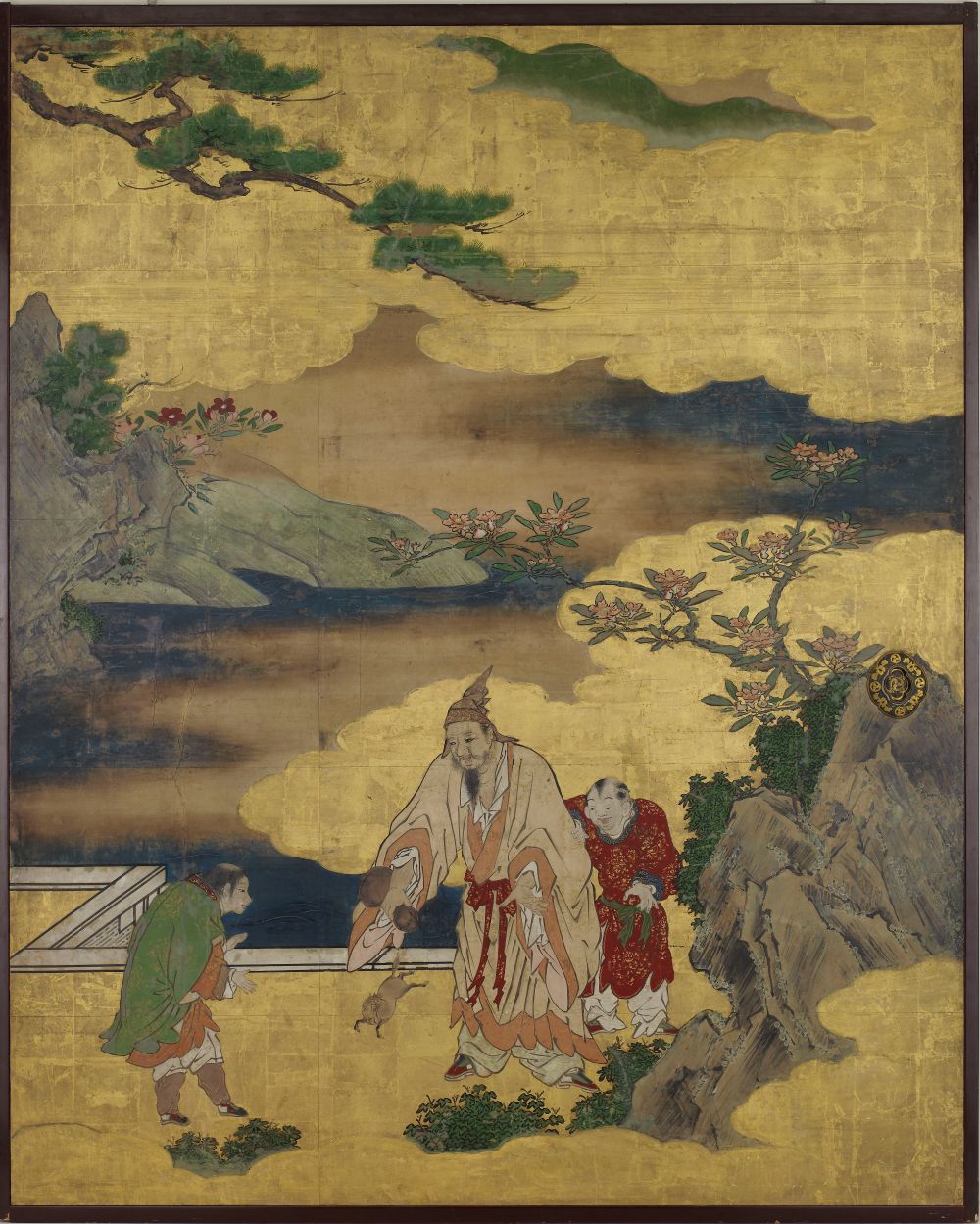
Kinkishoga, Sennin-zu (The Four Accomplishments and Immortal) is an opulent set of 17th-century Japanese sliding door panels currently being remounted in the Tateuchi Conservation Studio for a loan to a Japanese exhibition this summer.
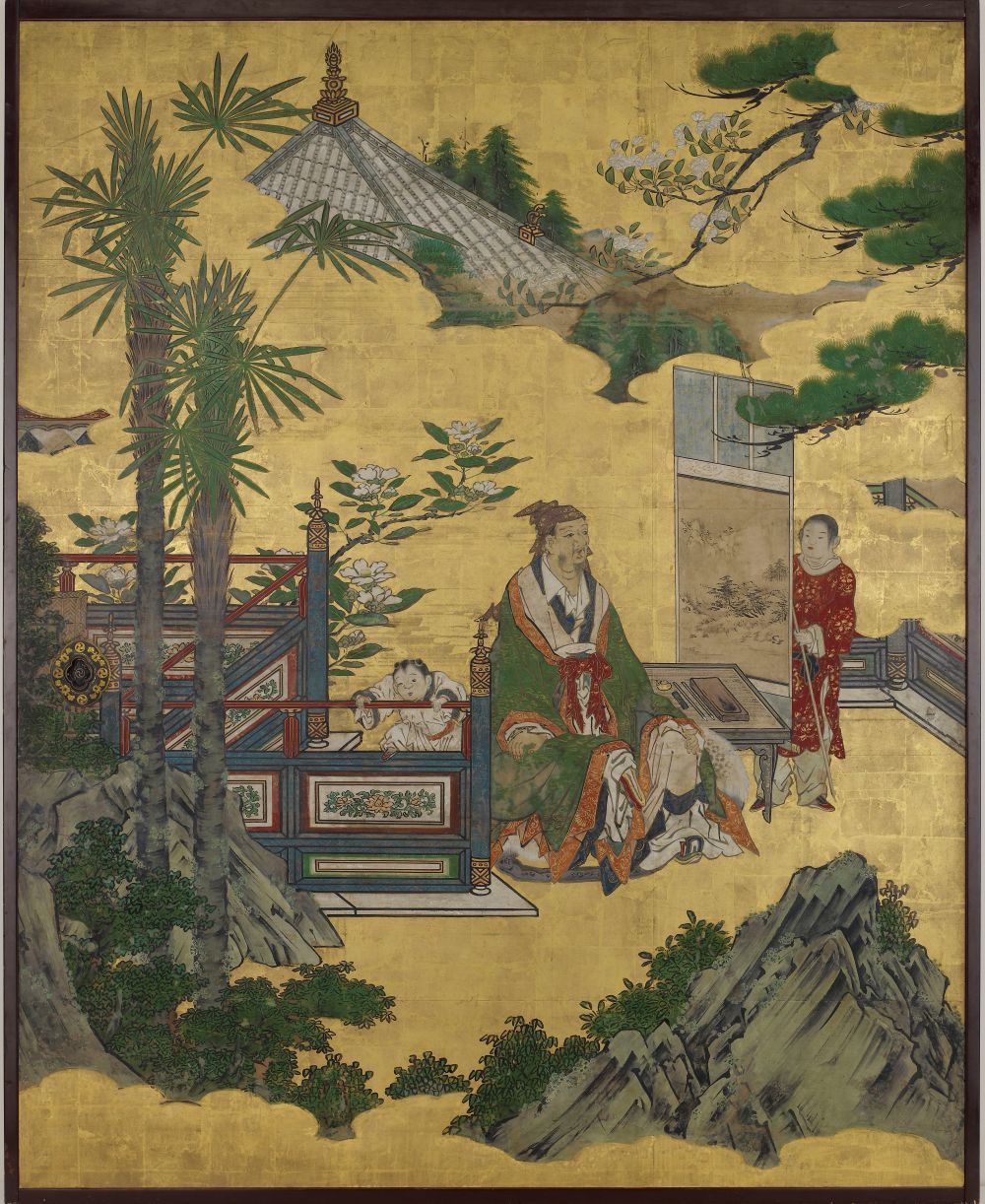
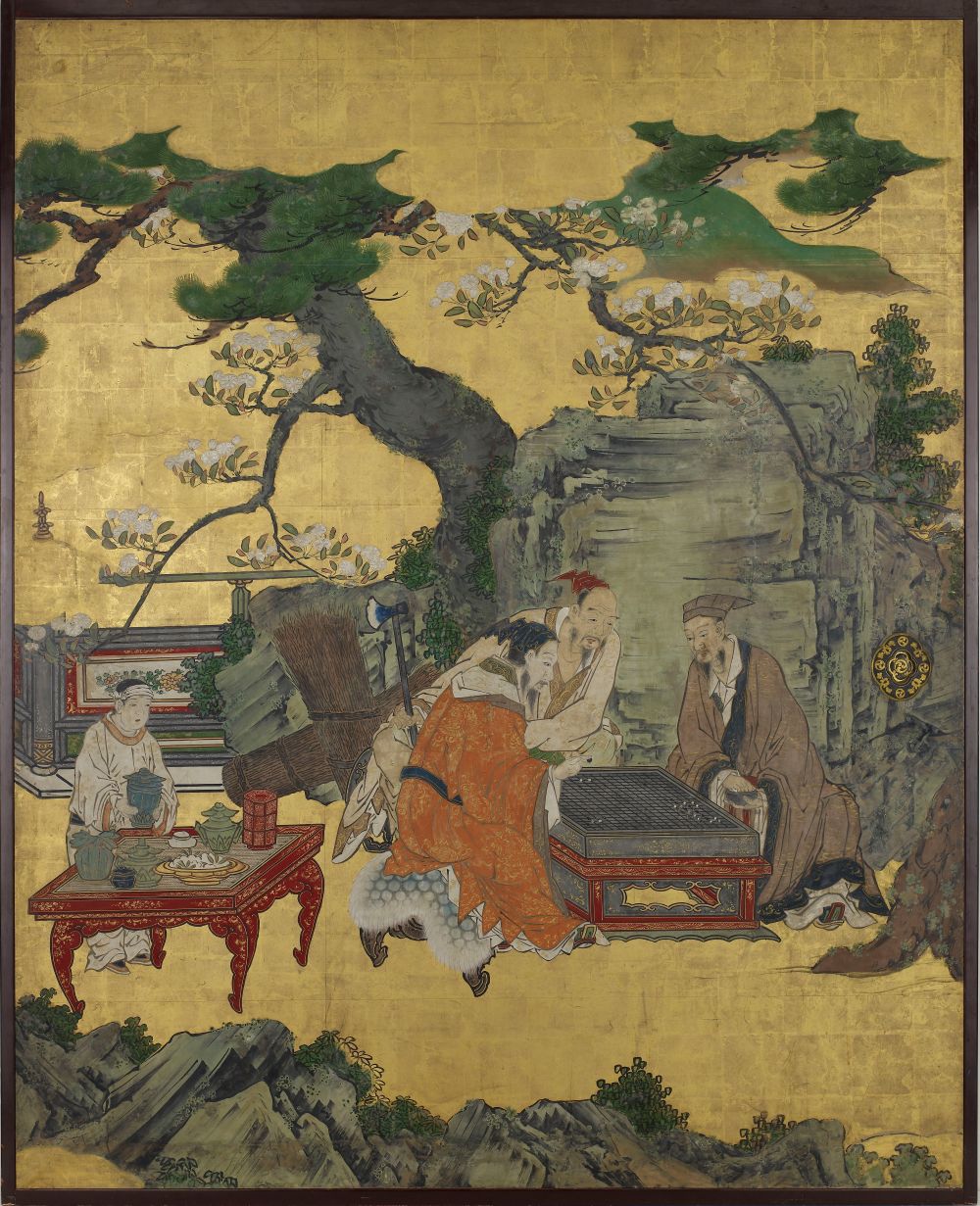
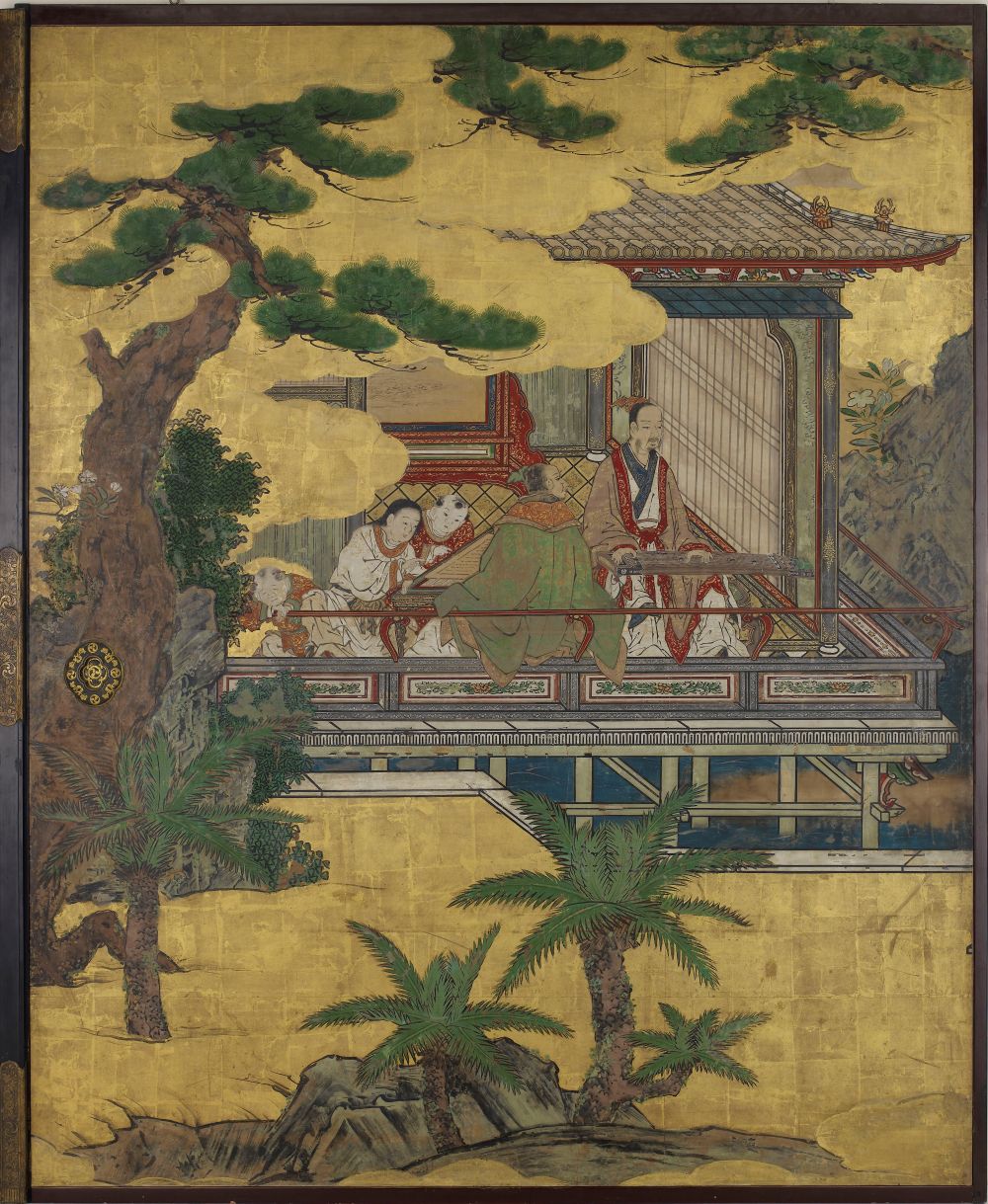
Acquired by SAM founding director Dr. Richard Fuller in 1951, the fusuma paintings depict Chinese scholar-gentlemen enjoying music, games, calligraphy, and painting in a lush garden. This popular subject was appropriated by Japan for door panels and folding screens during the 15th and 16th centuries. SAM’s fusuma were once a part of a larger suite of paintings installed in an important temple-shrine complex in the Nara region of Japan, parts of which are now in the British Museum and recently discovered in a private collection in northern Japan.
Leading the conservation effort on SAM’s team is Tanya Uyeda, SAM’s Director of East Asian Paintings Conservation. On November 20, 2025, Uyeda presented a fascinating talk about the history and preservation efforts of these sliding door paintings in SAM’s collection. This talk was part of Up Close with Conservators, a member-only lecture series where conservator specialists share the challenges, importance, and outcomes of art conservation.
“It is always a pleasure to share the work that my colleagues and I are doing in SAM’s busy Department of Conservation,” Uyeda said. “I appreciate the opportunity to learn in depth about the work my colleagues are doing, as we are often sequestered away in our own respective bubbles.”
Couldn’t attend her lecture? We asked Uyeda if she could share some of these insights on SAM Stories—read her insightful responses below. (And become a SAM member to attend future events like these!)
What tools or materials are required to remount these sliding door panels?
One of the unique features of Japanese paintings is their display format or “mounting,” such as a hanging scroll, hand scroll, folding screen, or in this case, fusuma (sliding doors). Because the painting is physically attached to the mounting, conservation treatment concerns both the mounting structure and the painting itself. For sliding door panels, treatment requires removing and stabilizing the paintings, as well as dismantling and rebuilding the mounting structure.
A new interior lattice and matching lacquer trim is being custom-made in Japan for SAM’s fusuma, so we do not require specialized carpentry tools to build them ourselves. We do prepare the handmade Japanese papers used to build up the support structure attached to the panels. Treatment of the paintings requires tweezers, brushes, and water sprayers to remove old paper support linings, along with knives, awls, and bamboo folders to prepare new linings. Adhesives include animal glue to consolidate friable pigments on the paintings, and a great deal of wheat starch paste for adhering support layers, mending tears on the painting, and for applying the support layers to the panels. After this work, we’re able to mount the painting to its finished panel.
What do you think people would be most surprised to learn about The Four Accomplishments?
These paintings are part of a larger suite that decorated the guest quarters of an important shrine in the Nara region of Japan in the 17th century. During this time period, sliding door paintings—which were always double-sided—served as room dividers. In their original configuration, the four SAM fusuma paintings are believed to have been attached to the other side of a set now in the British Museum collection.
The formerly double-sided panels were divided into eight panels that were subsequently sold to separate institutions. Many Japanese paintings undergo significant changes throughout their lifetime. Sliding door paintings could be turned into a set of folding screens, or a long handscroll may be separated into sections and remounted as multiple individual hanging scrolls. Investigating the materiality and structure of these paintings is essential to understanding their history, use, and connections over time.
The fusuma paintings have a long and rich history. During the conservation process, did you discover anything new about the provenance of these works?
Dismantling panel paintings such as these fusuma always leads to insight into past treatments and their past setting. Paper was a valuable commodity, and recycled papers were often used to build the support structure for panel paintings. These papers may have been taken from old account books, letters, and other correspondence, or even newspapers in later years.
Random dates and place names on these materials can give us clues as to when and where the painting was last conserved. We were able to confirm speculation that SAM’s paintings were remounted at least twice since departing their 17th-century shrine setting by dates on these underlayer documents, along with an inscription on the interior wooden lattice. By comparing paper characteristics, sizes, and configurations of the papers used on the SAM paintings with the related artworks, we can confirm through material evidence the purported relationship between fusuma paintings at the British Museum and those recently discovered in a private collection in Aomori, Japan.
These doors are being prepared for a loan to a Japanese exhibition next summer. Could you tell us more about this exhibition and collaboration?
The paintings will be a part of a larger show focused on the Japanese collection at the British Museum. It will travel to two venues in Japan in the summer of 2026. The sliding doors related to SAM’s paintings are the only paintings of this format in the British Museum collection, so the reunification of these long-separated works with those recently discovered in Aomori is a highlight of the exhibition. I have been collaborating with my conservator colleagues at the British Museum, as well as at the Tohoku University of Arts and Sciences, to share information on the British Museum and Aomori fusuma. We are excited to have conservation play an important role in the scholarship of these artworks.
Because of the large size of the paintings, we are collaborating with the National Museum of Asian Art at the Smithsonian to assist me in key treatment stages of the paintings. With the help of two colleagues, we have already completed treatment on two of the four paintings in December of last year. On the curatorial side, Aaron Rio, Tateuchi Foundation Curator of Japanese and Korean Art at SAM, has been collaborating with art historians and curators in London and Japan in preparation for this exhibition. This has already led to the important attribution of the paintings to the artist Kano Sōgen Shigenobu. Next year, Aaron Rio will contribute an essay about the SAM artworks in the prestigious Japanese art historical journal Kokka, as well as the forthcoming exhibition catalog.
Artwork credit: The Four Accomplishments and Immortal (Kinkishoga, Sennin zu fusuma e). Kano Sōgen Shigenobu, Japanese, active late 16th-early 17th century. Late Momoyama period (1573–1615) or early Edo period (1615–1868). Set of four sliding door panels; ink, color, and gold on paper. Eugene Fuller Memorial Collection, 51.37.1–4